

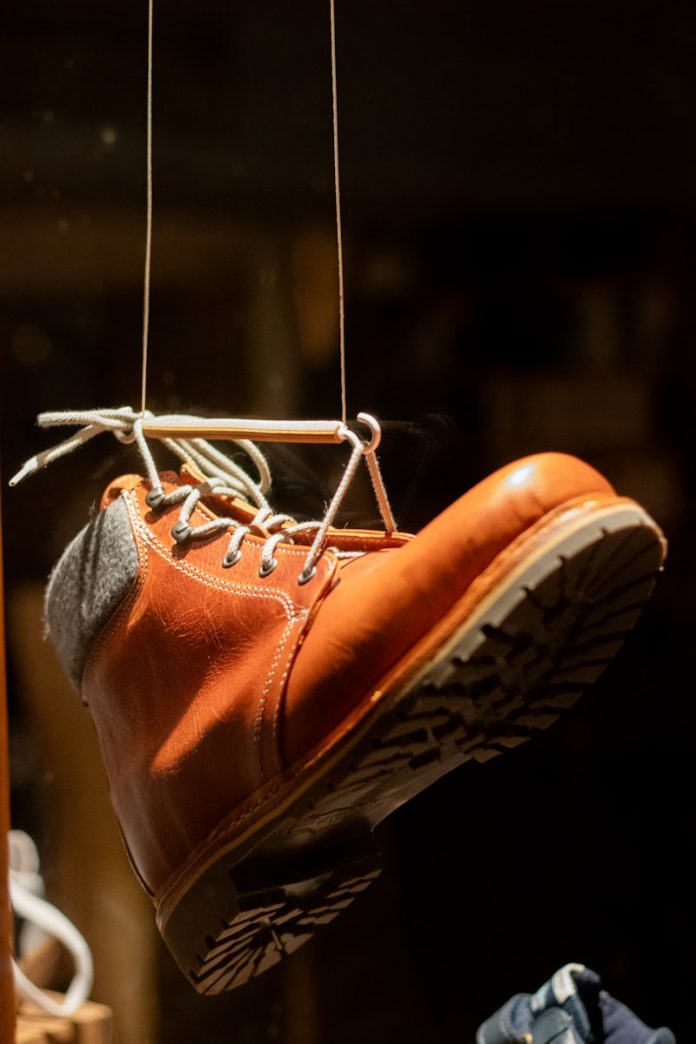
In the modern world, sneakers have transcended their athletic roots to become cultural icons, fashion statements, and personal canvases. What was once just footwear for running or basketball has evolved into an expressive art form — one that merges creativity, craftsmanship, and cultural commentary. The rise of sneaker customization marks a new era in fashion, where individuality rules, and every pair tells a story. Today’s sneakerheads, artists, and collectors are not just chasing limited-edition releases; they’re creating them.
From Utility to Identity: The Sneaker’s Evolution
Sneakers have always been symbols of movement — not just physical, but social. In the early 20th century, sneakers like Converse’s Chuck Taylor All-Stars or Adidas’s Stan Smiths were designed for sport, practicality, and performance. Yet over time, they became emblems of youth rebellion, street culture, and personal style. By the late 1980s, thanks to hip-hop’s influence and Michael Jordan’s partnership with Nike, sneakers entered the realm of aspiration and identity.
Then came the next frontier: customization. What started as small acts of rebellion — hand-drawing on canvas shoes, swapping out laces, or painting over logos — has evolved into a global movement. Sneaker customization represents the perfect marriage of fashion and art, consumer and creator. It challenges the idea of mass production by reintroducing the human touch, one brushstroke at a time.
The Birth of a Movement: Street Art Meets Streetwear
The rise of sneaker customization can be traced back to the intersection of street art and sneaker culture. Graffiti artists, long accustomed to using urban walls as their canvases, found new creative territory in sneakers. In neighborhoods across New York, Los Angeles, and Tokyo, artists began experimenting with color, texture, and message on the surfaces of Nike Air Force 1s, Vans, and Jordans.
These early customizers weren’t motivated by profit or trendiness — they were driven by self-expression. A pair of sneakers became a personal manifesto, a statement of individuality in a world obsessed with conformity. Artists like SBTG (Mark Ong) from Singapore and Mache Customs in the U.S. began transforming shoes into collectible works of art. Their designs — ranging from intricate camouflage to hand-painted portraits — blurred the line between wearable fashion and fine art.
In many ways, sneaker customization is the street-level version of haute couture. Where luxury houses make bespoke suits or gowns, customizers make one-of-a-kind sneakers. Both represent exclusivity, but customization adds something deeper: emotional connection. Each pair carries the mark of its maker, the soul of its wearer, and the fingerprints of creativity.
The DIY Revolution: Tools, Tutorials, and Technology
The democratization of art through the internet has propelled sneaker customization into the mainstream. Social media platforms like Instagram, TikTok, and YouTube have turned workshops into global classrooms. Tutorials teaching painting, airbrushing, and deconstruction have inspired millions to transform their kicks into something unique.
Today, anyone with patience, a steady hand, and imagination can become a sneaker artist. Acrylic paints, stencils, and hydro-dipping kits are widely available, allowing creators to experiment with bold gradients, logos, and reimagined branding. This DIY spirit has given rise to a new generation of sneaker customizers who operate outside traditional fashion institutions — self-taught, self-promoted, and entirely self-defined.
Technology has also redefined customization. 3D printing, laser engraving, and digital embroidery now allow for precise, professional-level design work at home. Platforms like Nike By You (formerly Nike iD) and Adidas MakerLab have institutionalized personalization, inviting customers to design their own sneakers from an official platform. Yet even these corporate efforts echo what the grassroots movement began: the belief that creativity should belong to everyone.
The Cultural Currency of Custom Sneakers
In today’s culture, sneakers are more than fashion — they’re conversation pieces. Custom pairs often serve as extensions of personality and social identity. For musicians, athletes, and influencers, custom kicks are visual metaphors for individuality and influence. When Travis Scott or Billie Eilish collaborates on a limited release, the world pays attention — but when an independent artist paints a pair by hand, it often resonates on a more intimate level.
Custom sneakers have also become collectibles. In the resale and art markets, one-off pairs can command thousands of dollars. Auctions at places like Sotheby’s and Christie’s have featured customized Air Jordans or Dunks alongside fine art. This isn’t just hype; it’s a cultural shift. Sneakers are now understood as artifacts of modern creativity — portable canvases that document the aesthetic of our time.
The symbolism of sneaker customization goes beyond fashion. It reflects a broader social desire to reclaim authorship in an era dominated by algorithms and automation. To customize is to resist uniformity, to insist that personal expression still matters in a world of sameness. Every hand-painted swoosh or stitched patch becomes an act of rebellion — quiet but powerful.
Artists at the Forefront
Some artists have risen to prominence by treating sneakers not just as products, but as stories. The late Virgil Abloh, through his Off-White collaborations with Nike, redefined what a sneaker could be. His deconstructed approach — visible stitching, quotation marks, exposed foam — celebrated imperfection and transparency. Though mass-produced, his designs carried the spirit of customization, showing how even mainstream fashion could embrace the handmade aesthetic.
Other artists, like The Shoe Surgeon (Dominic Ciambrone), have elevated sneaker customization to luxury craft. His workshop in Los Angeles produces custom sneakers using exotic materials such as python skin, Italian leather, and vintage denim. Each pair is meticulously handcrafted, merging traditional shoemaking with streetwear attitude. Ciambrone’s clients range from LeBron James to Drake — proof that personalized art resonates even at the highest levels of celebrity culture.
Independent creators, too, are leaving indelible marks. Female artists like Ceeze and Jen Mussari have brought feminine energy and fine-art sensibilities to a scene historically dominated by men. Their work reminds us that sneaker culture, though rooted in masculine spaces like sports and hip-hop, is evolving into a more inclusive and diverse artistic community.
Sustainability Through Customization
Beyond aesthetics, sneaker customization also speaks to a more responsible approach to fashion. In an age of fast fashion and overproduction, customization promotes longevity. Instead of discarding old shoes, artists give them new life. A faded pair of Air Maxes can become a masterpiece with a coat of paint or a new sole. This circular mindset — reuse, redesign, revive — aligns with the growing sustainability movement.
Brands have started noticing. Nike’s “Reuse-A-Shoe” program and Adidas’s experiments with recycled materials show that customization can intersect with eco-consciousness. Customizers, by nature, are already practicing sustainability — extending the life of products and reducing waste through creativity. In this sense, sneaker art is not only cultural but also environmental activism.
The Future: Where Art, Fashion, and Technology Collide
Looking ahead, sneaker customization is poised to become even more experimental. The fusion of fashion tech, digital art, and augmented reality could revolutionize how people design and wear sneakers. Imagine scanning a pair with your phone to reveal hidden graphics or AR animations. Or 3D-printing a custom sole pattern that perfectly fits your foot and your aesthetic. The possibilities are limitless.
The metaverse, too, has introduced a new dimension of sneaker culture — virtual customization. Digital artists are designing sneakers for avatars in online worlds, sometimes selling them as NFTs. While physical sneakers express identity in the real world, virtual ones do the same in digital spaces. This convergence of creativity, technology, and self-expression signals that sneaker art will continue to evolve alongside culture itself.