
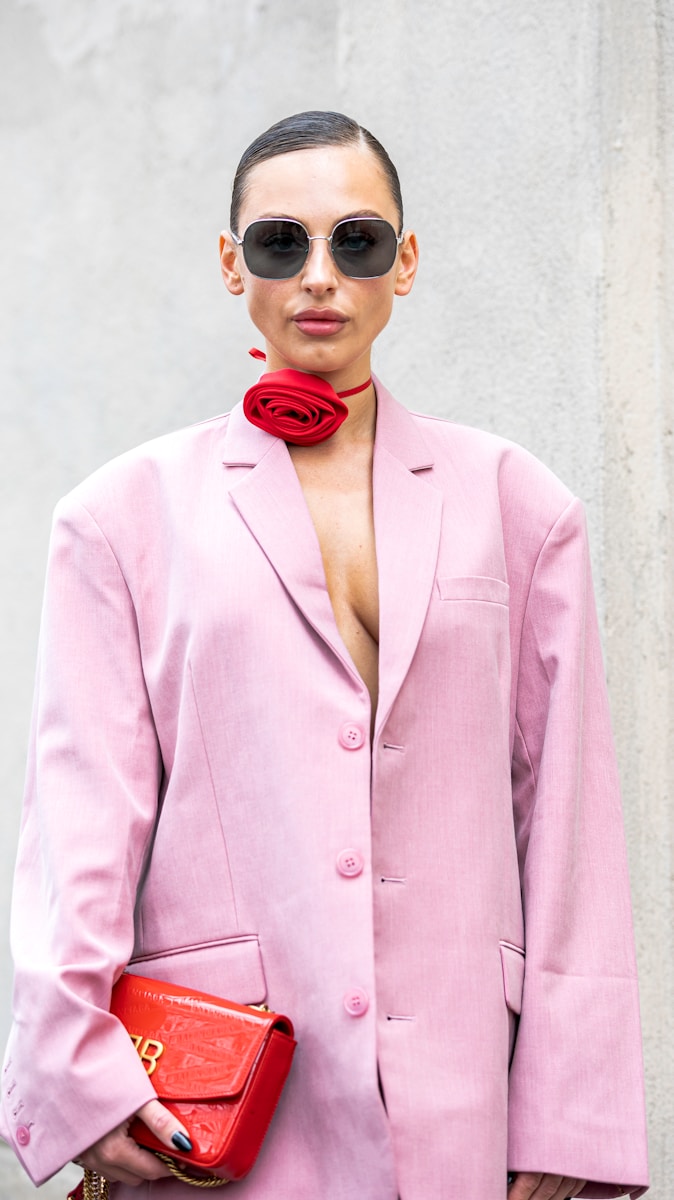
Fashion has always been a language, one that speaks before we ever open our mouths. Whether we realize it or not, what we choose to wear tells a story — not just about who we are, but also about what we value, what we hope to project, and sometimes even what we’re trying to hide. In recent years, two opposing aesthetics have come to define the cultural conversation around style: quiet luxury and loud statements. The first whispers elegance through subtlety, while the second shouts identity through extravagance. Both claim authenticity, but which one truly wins in the long run?
To understand this debate, it helps to step back from the social media noise and look at what these two philosophies really mean. Quiet luxury, sometimes called “stealth wealth,” isn’t new. Its roots stretch back to old-money sensibilities — the kind where quality speaks for itself and brand names stay hidden. Think of a cashmere coat that doesn’t scream designer but feels like a warm promise; or a leather bag crafted so well that only those who truly know craftsmanship would recognize its worth. In this realm, luxury is about feeling, not flaunting. It’s about the drape of silk, the weight of gold, the quiet confidence of restraint.
Loud statements, on the other hand, are about visibility. They thrive on bold logos, unconventional silhouettes, and unapologetic color. This is the realm of streetwear drops, pop culture collaborations, and influencers who use fashion as a megaphone for identity. To them, fashion isn’t a private indulgence; it’s a declaration of selfhood. Loud fashion doesn’t whisper—it insists on being seen. And in a world built around attention economies and social validation, being seen is often the whole point.
At first glance, it’s easy to assume that quiet luxury represents good taste and loud fashion represents excess. But that’s a shallow reading. The truth is more complicated. Both aesthetics have cultural logic — and both express different kinds of power.
Quiet luxury is, by design, exclusive. It depends on a trained eye to recognize it. You have to know that the coat is Loro Piana or The Row; you have to understand why a minimalist bracelet might cost thousands. This creates an inner circle — those who “get it” and those who don’t. The elegance is deliberate, but so is the gatekeeping. In many ways, quiet luxury is the fashion of those who already belong — people who no longer need to prove anything because their social position speaks for them. Its allure comes from understatement, but understatement is itself a privilege. The ability to choose restraint only exists when abundance is already assumed.
Meanwhile, loud fashion is the style of becoming. It’s the look of those still writing their stories — people who use color, texture, and logos as a kind of personal branding. For them, fashion is not a secret language among insiders but a celebration of individuality and ambition. Think of the bold experimentation of musicians like Lil Nas X, the daring glamour of Cardi B, or the DIY authenticity of streetwear designers who turn rebellion into art. Loud statements tell the world, “I’m here.” They are democratic in spirit, open to anyone who has the courage to be seen.
The tension between these two modes isn’t just about aesthetics — it’s about class, identity, and cultural shifts. For decades, luxury was coded as quiet. Brands like Hermès and Brunello Cucinelli built reputations on understatement. But the 21st century democratized luxury. Suddenly, anyone with Wi-Fi and hustle could enter the conversation. Streetwear brands like Off-White and Balenciaga rewrote the rules, fusing high fashion with youth culture. The lines between couture and sneakers blurred. And with that came a rebellion against the old hierarchy. Loud statements became a way of reclaiming visibility — particularly for marginalized voices who were once excluded from elite spaces.
Still, the pendulum always swings. The more conspicuous fashion became, the more some people craved a return to subtlety. After years of logo mania and social media flexing, the quiet-luxury aesthetic resurfaced as a kind of cultural detox. Shows like Succession turned beige into a status symbol, and minimalist outfits became shorthand for discernment. “If you know, you know” became the new badge of taste.
But even this revival of quiet luxury isn’t purely organic. It’s another cycle in fashion’s endless reinvention machine — a reaction, not a revolution. The modern version of quiet luxury, stripped of logos but inflated with price, appeals to a growing fatigue with noise. It aligns with broader cultural trends: minimalism, sustainability, mental peace. Yet paradoxically, it’s become its own statement. Wearing a $2,000 “plain” sweater is no less performative than wearing a logo-covered jacket; the difference lies in the audience. One aims to impress the crowd, the other aims to impress the connoisseur. Both seek validation — just from different tribes.
So which one wins? The answer depends on what kind of victory we’re talking about.
If fashion’s goal is visibility, then loud statements dominate our era. Social media thrives on contrast and drama, not subtle textures. A quiet outfit doesn’t photograph as well as a neon coat. Influencers and trend cycles reward the spectacular, not the subdued. In that sense, loud fashion has democratized self-expression. It’s inclusive, diverse, and endlessly creative.
But if fashion’s goal is longevity, quiet luxury may have the edge. Trends fade, but quality endures. The soft wool coat outlasts the viral jacket. The well-tailored blazer transcends seasons. In a world increasingly concerned with sustainability and conscious consumption, the quiet approach resonates with people tired of constant turnover. It suggests maturity, craftsmanship, and patience — qualities that feel almost radical in a culture of speed.
Still, perhaps the real insight is that neither side truly wins because both are necessary. Style isn’t a war between opposites but a conversation between them. Loud statements push boundaries, inject fun, and challenge conformity; quiet luxury refines, distills, and reminds us of the value of silence. One builds momentum, the other builds meaning. Without the boldness of loud fashion, the world would feel dull. Without the restraint of quiet luxury, it would feel chaotic.
The most compelling modern style icons don’t pick sides. They blend both languages fluently. Zendaya, for example, moves effortlessly between avant-garde couture and minimalist tailoring. Rihanna can wear a dramatic fur coat one day and a simple white tee the next — and both feel equally authentic. Their power lies not in allegiance to a trend but in the confidence to interpret it. They remind us that real style isn’t about volume; it’s about voice.
Ultimately, the quiet-versus-loud debate mirrors something deeper about human nature. Some people find strength in subtlety; others find it in spectacle. Some crave discretion, others desire declaration. Both impulses are valid, both deeply human. Our wardrobes are just the canvas where we test those instincts — to belong or to stand out, to remember or to reinvent.
In the end, perhaps fashion isn’t about which side wins, but about how we listen. Quiet luxury teaches us to notice—the stitching, the material, the craftsmanship that can’t be captured in a photo. Loud fashion teaches us to speak—to celebrate difference, defy norms, and claim space. The truest expression of style might be knowing when to do each. To whisper when others are shouting, and to shout when silence would mean invisibility.
Because the best-dressed people aren’t those who follow trends, whether loud or quiet. They’re the ones who understand what they want to say — and dress in a way that says it clearly. In that sense, the winner isn’t quiet luxury or loud statements. The winner is the voice that’s unmistakably, unapologetically one’s own.