

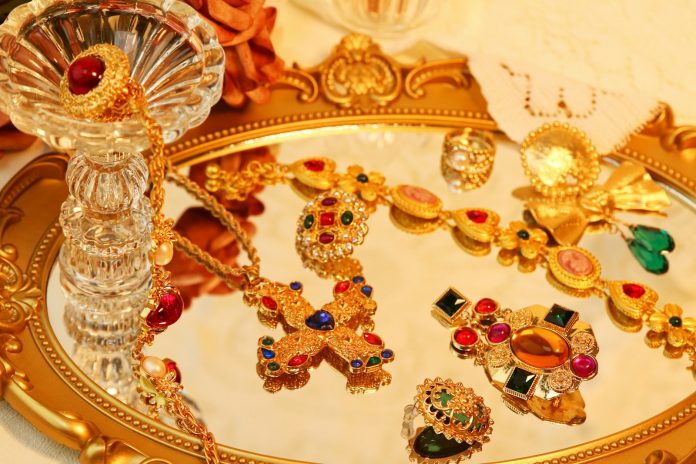
There is something quietly magical about jewelry — a glint of light on a wrist, a flash of color against the skin, a sparkle that seems to pulse with memory. We may think of fine jewelry as luxury or ornament, but for centuries, people have worn it as something deeper — a mirror of identity, an amulet of meaning. Among all forms of adornment, birthstones hold a unique place: they do not simply decorate, they belong. Whether a sapphire pendant worn by a September child or an emerald ring gifted to mark May, birthstones turn jewelry from beautiful objects into personal talismans, weaving together geology, mythology, and emotion.
This essay explores how birthstones evolved, why they resonate so powerfully, and how modern fine jewelry continues to transform them into personal art — merging ancient belief with contemporary design.
A Spark Born of History
The concept of linking stones to identity has roots far older than the jewelry counters of today. Ancient civilizations — from Babylon and Egypt to India and Greece — believed gemstones possessed spiritual or cosmic energy. The earliest idea of “birthstones” is often traced to the Breastplate of Aaron described in the Book of Exodus: a sacred object adorned with twelve stones representing the twelve tribes of Israel. Over time, these twelve stones became associated with the twelve zodiac signs, and eventually, the twelve months of the year.
By the Middle Ages, Europeans began wearing one specific gemstone corresponding to their birth month as a charm for good fortune and protection. Though the associations varied between cultures — ruby for vitality, pearl for purity, topaz for strength — the underlying belief remained constant: gemstones could channel the forces of nature and destiny into human life.
Modern birthstone lists, such as those standardized by the American National Retail Jewelers Association in 1912, may appear more commercial, but they still echo those ancient roots. When we buy or wear a birthstone today, we are, knowingly or not, continuing a practice that is thousands of years old — one that merges faith, folklore, and fashion into a single glittering tradition.
Meaning in Color: The Language of the Stones
Each birthstone tells a story, not only through its hue and brilliance but through the symbolic traits it has gathered over centuries.
January – Garnet: Deep red like glowing embers, garnet has long symbolized protection and safe passage. Ancient travelers carried it as a talisman against danger, while modern wearers see it as a stone of courage and commitment — a reminder of passion grounded in loyalty.
February – Amethyst: Once as prized as diamonds, amethyst was believed to guard against intoxication — hence its Greek name amethystos, meaning “not drunken.” Today, it represents calm, clarity, and spiritual strength, its violet color evoking both serenity and depth.
March – Aquamarine: The sea’s pale blue crystal, aquamarine embodies tranquility and truth. Romans believed it would keep sailors safe; today, it’s often seen as a symbol of clear communication and emotional balance.
April – Diamond: The hardest of all stones, the diamond represents purity and invincibility. Yet beyond its brilliance, it also reflects endurance — the idea that clarity and strength are forged under immense pressure.
May – Emerald: Ancient Egyptians adored emeralds for their lush green vitality, associating them with fertility and renewal. For the modern wearer, emerald symbolizes wisdom and hope — a gem of the heart and the mind alike.
June – Pearl or Alexandrite: Pearls, born from the ocean rather than the earth, symbolize innocence and emotional honesty. Alexandrite, with its shifting colors, stands for adaptability and joy in change — two sides of June’s restless beauty.
July – Ruby: Called the “king of gems,” ruby has always symbolized passion and life force. Warriors once wore it into battle, believing it brought invincibility. Its fire-red glow still feels alive with intensity and love.
August – Peridot: A gem of sunlight, peridot was treasured by ancient Egyptians as the “gem of the sun.” It represents joy, renewal, and self-confidence — a perfect antidote to negativity.
September – Sapphire: Known for its deep celestial blue, sapphire has long been associated with wisdom and divine favor. Kings and scholars wore it to channel clarity of thought; today, it remains a symbol of truth and loyalty.
October – Opal or Tourmaline: Opal’s shifting iridescence has made it a stone of inspiration and creativity, while tourmaline, with its spectrum of colors, celebrates emotional openness and diversity.
November – Topaz or Citrine: Warm golden hues make these stones symbols of optimism and energy. Topaz was once believed to calm anger, while citrine — “the merchant’s stone” — was said to attract prosperity.
December – Turquoise, Zircon, or Tanzanite: Turquoise, ancient and sacred, embodies protection and friendship. Zircon glows with resilience, and tanzanite — a relative newcomer — carries the rare magic of transformation.
Each stone carries its own whisper of time and myth. But beyond these associations lies a deeper truth: we respond to color and light instinctively. A gemstone’s meaning is as much personal as it is historical — a dialogue between its ancient symbolism and our own lived experiences.
Jewelry as Biography
Fine jewelry has always been about storytelling. A ring, a pendant, a pair of earrings — these are often small chapters in someone’s life, marking love, achievement, loss, or rebirth. Birthstones intensify this narrative dimension. Because they are tied to identity, they transform jewelry into biography: the stone becomes a mirror for one’s character and evolution.
Think of someone who wears their birthstone not because of superstition but because it represents who they are becoming. The May-born artist wearing an emerald ring might not just admire its green fire — they might see in it a reminder of growth, creativity, and patience. A December traveler choosing turquoise may do so not for fashion but for its symbolic protection and connection to wisdom. The meanings evolve as the person does; the jewelry keeps pace with the wearer’s story.
This is why birthstones persist in fine jewelry long after trends fade. Minimalist gold chains, maximalist cocktail rings, avant-garde sculptural settings — all may change with the decade, but the personal power of a stone remains constant. It is not only adornment; it is identity crystallized.
Craftsmanship and the Modern Birthstone Revival
In the last decade, fine jewelry has experienced a renaissance of personalization. Consumers, especially younger ones, are drawn to pieces that tell their stories rather than just display status. Birthstones have re-emerged as the emotional center of this movement.
Modern designers are reinterpreting the birthstone tradition through ethically sourced gems, recycled metals, and contemporary forms. Custom engraving, mixed-gem pieces representing family birth months, and layered talisman necklaces have replaced the single-stone pendant of earlier eras. Artisans see each stone as a starting point — a palette of meaning around which to build design narratives.
Technology has also expanded the creative possibilities. 3D printing and computer-aided design allow for intricate settings that highlight the individuality of each gemstone, while online platforms let clients co-design their own pieces. The result is a democratization of fine jewelry — one where meaning, not price tag, defines luxury.
At the same time, there’s a growing appreciation for craftsmanship. In a fast-fashion world, a hand-cut sapphire or custom-set ruby carries the quiet power of time and human touch. The fusion of digital tools and artisanal skill mirrors the dual nature of birthstones themselves — timeless yet always evolving.
Beyond Gem Lore: The Emotion of Connection
Ultimately, what gives birthstones their enduring power is not just their mythic history or their glittering beauty — it’s the emotional connection they foster. To wear one’s birthstone is to carry a piece of personal mythology, to keep a private symbol of strength or serenity close to the skin.
In an age of mass production, that intimacy matters. Fine jewelry made with birthstones bridges the tangible and the emotional — a reminder that luxury is not only about rarity but about resonance. When someone gives a loved one a birthstone piece, they are not just offering color or sparkle; they are acknowledging who that person is, and perhaps who they aspire to become.
Birthstones remind us that jewelry can still mean something — that it can be both art and talisman, both object and story. Their allure lies not merely in their sparkle, but in their capacity to carry memory, hope, and identity in a form that endures. Every gem, after all, begins deep within the earth, shaped by immense pressure over ages — much like the human lives they come to represent.